If you’re receiving Support at Home services, you’ll continue to receive a monthly statement, similar to what many people were used to under the Home Care Packages (HCP) program.
While the format and terminology may look a little different, the purpose remains the same: to help you understand how your funding is being used, what services you’ve received, and how much of your budget remains.
For many older Australians, this statement is an important tool for staying informed and confident about their care.
What is a Support at Home statement?
Your Support at Home statement is a monthly summary showing how your quarterly funding is being used. It provides a clear overview of your care and spending, all in one place.
Your statement will usually show:
- The funding available to you for the quarter
- Which services your funding has been used for
- Any government subsidies applied
- Any contributions you’ve made
- The balance remaining in your budget
This transparency helps you make informed decisions about your care and services.
Why do I receive it every month?
Although Support at Home funding is allocated quarterly, providers are required to issue monthly statements. This allows you to:
- Track services as they’re delivered
- Understand how your budget is tracking across the quarter
- Raise questions early if something doesn’t look right
It’s helpful to think of your statement as a progress snapshot, rather than a bill.
What should I look for?
While statements may look slightly different depending on your provider, most will include:
- A quarterly budget overview
- A summary of how your funding balance has changed during the month
- An itemised list of services delivered and related costs
- Details of any co-contributions
- Any adjustments or corrections from previous months, if applicable
Reviewing this information regularly can help you stay on top of your care plan.
A simple checklist to make it easier
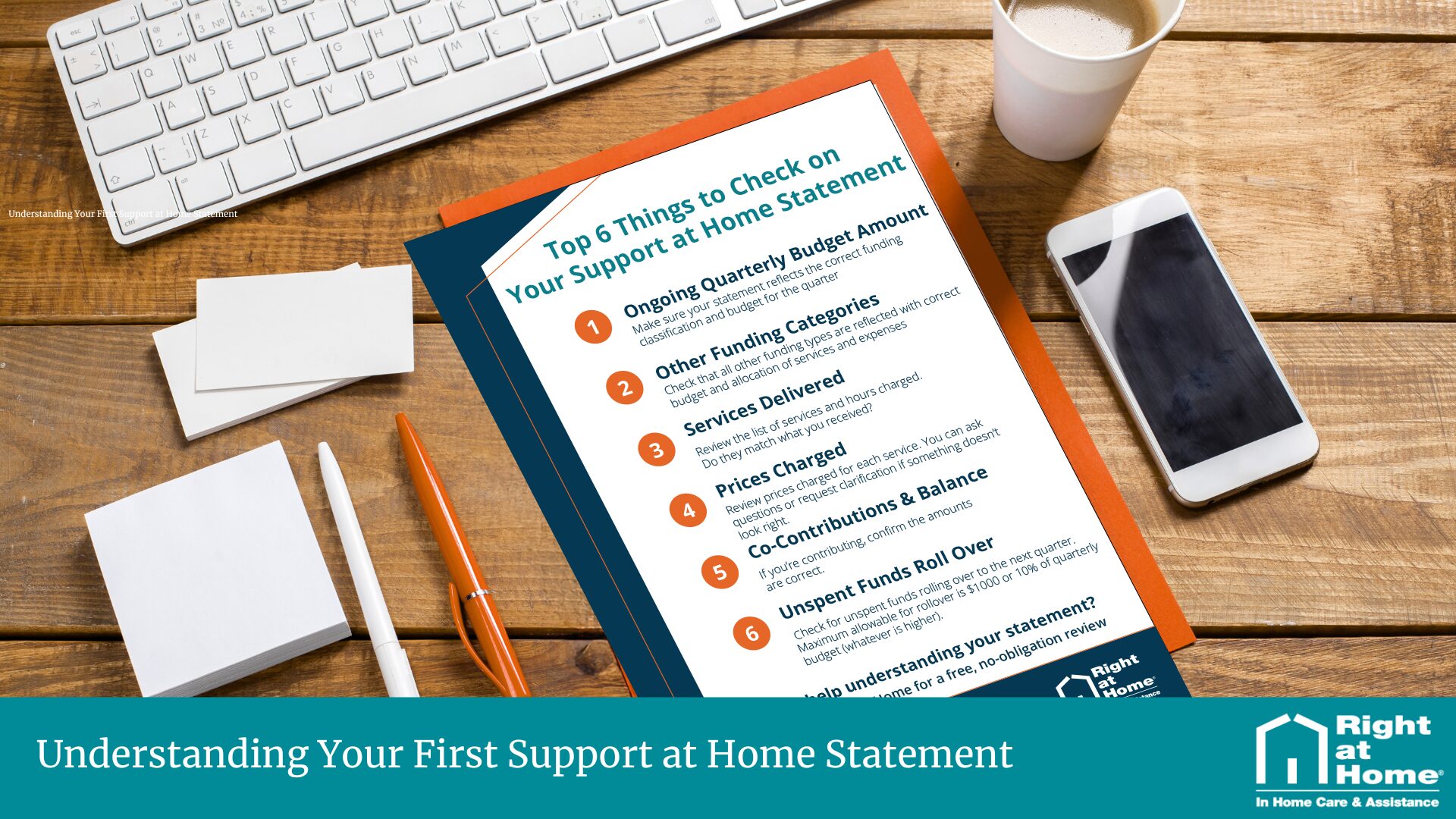
To support older Australians and their families, a simple checklist has been created highlighting the top six things to check when reviewing a Support at Home statement.
The checklist is designed to help you feel confident — not overwhelmed — and to support conversations with your care team if you have questions.
Download the “Top 6 Things to Check on Your Support at Home Statement” resource to help you review your statement with confidence.