Anyone aged in their 60s, 70s or beyond knows what it feels like to notice changes in their body. Maybe they’re not quite as steady on their feet or they’re forgetting names more often than they used to. Some of these changes are normal with ageing; others can be minimised with the right habits to keep us healthy, sharp and mobile.
Stanford Medicine clinicians say that the seventh and eighth decades of our lives are the perfect time to focus on habits that will preserve independence, mobility and mental sharpness.
The choices we make at this stage can have a profound impact on how we age. While we can’t turn back the clock, research shows that it’s never too late to adopt habits that can help maintain our independence, protect our cognitive health and improve our quality of life well into our 80s and beyond.
“It’s never too late to start,” said Abby King, PhD, a Stanford Medicine professor of epidemiology and population health and a faculty member at the USA’s Stanford Prevention Research Center. King has spent decades studying health behaviours across the lifespan.
“We have a number of studies showing that even people who were very inactive were able to gain fitness and wellbeing benefits by increasing their regular physical activity levels in ways that fit their abilities,” she said.
We spoke to King and other Stanford Medicine health experts about the most important habits to prioritise in our 60s and 70s. Their recommendations vary from staying mobile and mentally engaged to catching health problems early. Whether someone has been healthy their whole life or they’ve dealt with chronic conditions, these habits can help maintain independence and vibrance.
1. Strength and power training to stay independent
As we age, exercise isn’t just about staying fit; it’s also about daily functioning and quality of life. The ability to get up from a chair without using our hands, carry groceries or catch ourselves if we stumble can mean the difference between living on our own terms and needing assistance with daily activities.
Even if we’ve been relatively inactive for most of our life, integrating small bits of movement into our day can make a difference at any age, said Silvia Tee, MD, a clinical associate professor of medicine and a geriatrician at the Stanford Senior Care clinic.
“With age, muscles can get weak very easily,” Tee said. Just a few days of inactivity, she pointed out, can trigger long-term mobility challenges. On the flip side, a regular exercise routine can also help people stay healthy and independent.
For older adults’ optimal levels of function, the U.S. Department of Health and Human Services, which authorised the most recent national physical activity guidelines for Americans in 2018, recommends 150 minutes per week of moderate-intensity aerobic activity like brisk walking, along with muscle-strengthening activities at least twice a week, or a comparable combination of the two. This doesn’t mean you need to lift heavy weights at the gym; in addition to regular walking — among the most healthful and appealing forms of exercise for midlife and older adults — simple exercises like chair squats, wall push-ups or using resistance bands can make a significant difference in helping individuals maintain their strength and physical function.
“There’s been a been push, particularly for women, to lift heavier weights as they age,” said Michael Fredericson, MD, a professor of physical medicine & rehabilitation and director of Stanford Lifestyle Medicine. “But a lot of people don’t like lifting heavy weights, and that scares them away from doing any resistance training at all. You can absolutely get the same benefit by lifting lighter weights and doing more reps, provided you push to failure.”
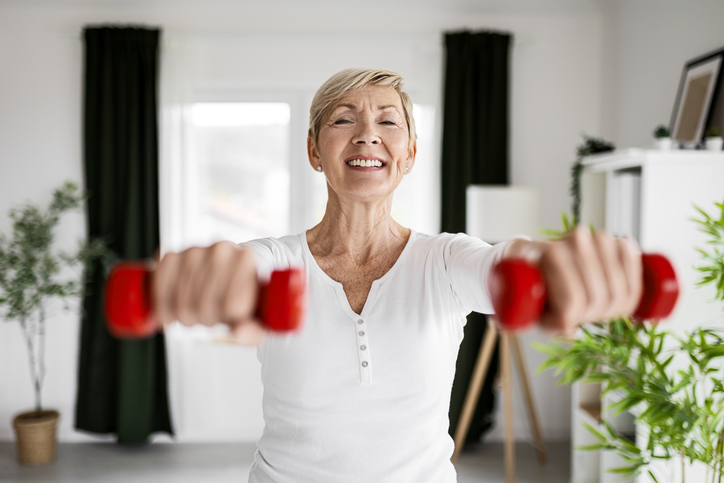
For her patients who are unable to carry out more complex exercises, Tee often tells them to try sit-to-stand exercises, in which they lower yourself up and down from a chair 10 to 15 times, gradually making it more challenging by using less hand support or a lower chair.
When it comes to hitting aerobic goals, research shows that aiming for at least 7,000 steps per day provides significant health benefits. While a 2025 study found that walking in increments of 10 minutes or more had the biggest impact on lowering mortality and cardiovascular disease, other large-scale studies have shown that the total accumulation of steps across a day or week, irrespective of how those steps are attained, can provide substantial benefits across a number of different health areas. Tee’s advice echoes this data: When patients say a longer walk feels daunting, she suggests breaking it into shorter walks throughout the day.
2. Balance and gait training for fall prevention
Even if someone doesn’t feel frail, the 60s and 70s are the ideal time to start working on balance. The better our balance, the less likely we are to fall — and falls are a leading cause of injury and loss of independence in older adults. One study showed that people aged 51 to 75 who could stand on one leg for just 10 seconds had an improved mortality rate.
“When I talk to older adults, I recommend to start with simple static balance training exercises, like single-leg stands or corner stands,” Tee said. She suggests to hold the countertop or a chair while standing on one leg and aim for 10 to 20 seconds at a time, switch legs, and repeat 5-10 times per leg. For a corner stand, position yourself with feet together and your back toward the corner of a room — so you have support in multiple directions — with hands on the wall and eyes closed to practice balance.
Fredericson emphasises that all older adults should integrate this kind of exercise into their routine.
“My take on balance training is that we should be doing it all the time,” he says. “Why wait until you’re losing your balance to work on it?”
A simple way to remember to fit it in, he says: Pair it with brushing your teeth.

3. Optimise nutrition as you age
Nutrition becomes increasingly critical in these years — not for weight loss, but for maintaining our strength, independence and quality of life. As we age, our body’s ability to build and maintain muscle declines significantly, meaning we need more protein and nutrients even if we’re eating fewer total calories. Nutrients can mean the difference between staying active and independent versus becoming frail and dependent on others.
Research shows that healthy older adults benefit from approximately 1.0 to 1.3 grams of protein per kilogram of body weight daily. For a 150-pound person, that’s about 68-88 grams of protein per day. For individual of this size, you can hit this by eating three meals that contain 20 to 30 grams of protein — a 3-to-4-ounce chicken breast, one cup of Greek yogurt or cottage cheese, a can of tuna, three eggs, or 5 ounces of tofu. Beyond protein, experts recommend following a Mediterranean-style diet, which has consistently been shown to reduce the risk of chronic diseases including heart disease, diabetes and cognitive decline.
“The Mediterranean diet has been ranked No. 1 for weight loss and overall health,” Fredericson said. “Studies have shown that it’s an anti-inflammatory diet, and we know that inflammation is linked to so many diseases from heart disease to even Alzheimer’s.”
King also emphasises moving away from ultra-processed foods that are high in salt, sugar and saturated fats.
“Focus on whole foods,” she said. “It doesn’t have to be complicated. I’m encouraged by the fact that the food industry is making eating healthier a lot easier than it used to be with things like grab-and-go fresh salads and healthier frozen options.”
To follow the Mediterranean diet and similar whole food, “plant-forward” diets — which have been shown to be a healthy choice across a number of different health areas — focus on these nutritional priorities:
- Fill half your plate with fruits and vegetables
- Include lean protein at each meal
- Choose whole grains over refined carbohydrates
- Prioritise healthy fats (olive oil, nuts, seeds, avocados)
- Ensure adequate calcium and vitamin D for bone health
- Minimise ultra-processed foods
4. Keep your brain sharp with cognitive and social habits
One of the biggest health concerns as people enter these decades is cognitive decline and dementia. While genetics play a role, many of the most important risk factors are ones we can influence with our habits — including exercise, diet, sleep and stress management. But research also shows that staying mentally and socially engaged can make a meaningful difference in protecting brain health.
Mental stimulation through activities like crossword puzzles, learning new skills or engaging in complex conversations appears to help maintain cognitive function, though the evidence comes primarily from observational studies rather than randomised trials.
“I think it helps,” said Victor Henderson, MD, a professor of neurology who specialises in Alzheimer’s disease and healthy aging. “The data are fairly consistent in that regard.”
Henderson tries to do the New York Times Sunday crossword puzzle every week, though he realises that alone won’t likely have a huge long-term impact.
He adds that mental engagement isn’t just puzzles. Reading, taking classes, learning a new language or instrument, keeping a regular written journal of one’s activities, thoughts, and perspectives, or even engaging in meaningful conversations all count as cognitive exercise.

Perhaps even more important than doing mental puzzles: staying socially connected. Studies have found that people who are more socially connected have better cognitive function and memory.
“Social connection is really important for healthy aging — for your brain and for your emotional health,” King said. “Finding ways to stay engaged with others, whether through community groups, volunteer work or simply maintaining close friendships, is one of the most protective things you can do for your long-term health.”
When we’re socially engaged, we’re also mentally engaged. Conversations require us to listen, process information, remember context and respond appropriately — all activities that keep the brain active.
5. Prioritise preventive care and monitoring
As we age, preventive screening becomes more personalised, and what our doctor recommends may vary from what they tell others our age. While we may have graduated from some routine screenings, others become even more important, and the decision often depends on our overall health and life expectancy.
“For a lot of screening recommendations, we consider whether we think patients have 10 years or more to live,” Tee explained.
Some of her healthiest 80-year-old patients continue with regular colonoscopies or mammograms if they have a strong family history or previous abnormal results and maintain good overall health, she says. But for a 75-year-old with complex medical conditions, she may recommend against such procedures.
The U.S. Preventive Services Task Force recommends several key screenings for people in their 60s and 70s:
- Annual blood pressure checks — hypertension often has no symptoms but significantly increases your risk for heart disease, stroke and cognitive decline
- Regular cholesterol screening to assess cardiovascular risk
- Diabetes screening, as risk increases with age
- Bone-density screening for osteoporosis, particularly for women over 65 and men over 70 with risk factors
- Vision and hearing tests, as both can significantly impact quality of life and fall risk
- Annual influenza vaccines and updated COVID-19 vaccines
Beyond screenings, scheduling annual physicals with your primary care provider will help with tracking your own health risks and goals.
“Annual primary care visits are a nice way to touch base with your health care provider and exchange information,” King said. “They can be aware of anything that’s changed with your health and help you figure out what you need to focus on.”
For many older adults with chronic conditions, more frequent visits — every three to six months — may be appropriate to monitor multiple conditions and medications.
Home monitoring of certain health metrics can also be valuable. For instance, for someone with high blood pressure, checking it regularly at home makes for better treatment decisions. However, King cautions that some people become anxious with too much health data.
“Some love it; they can’t get enough of it, and it helps,” she said. “For others, it can create so much anxiety and obsessional focus that it’s not healthy. We all have to figure out which group we belong to.”
This article first appeared in Stanford Medicine News.